
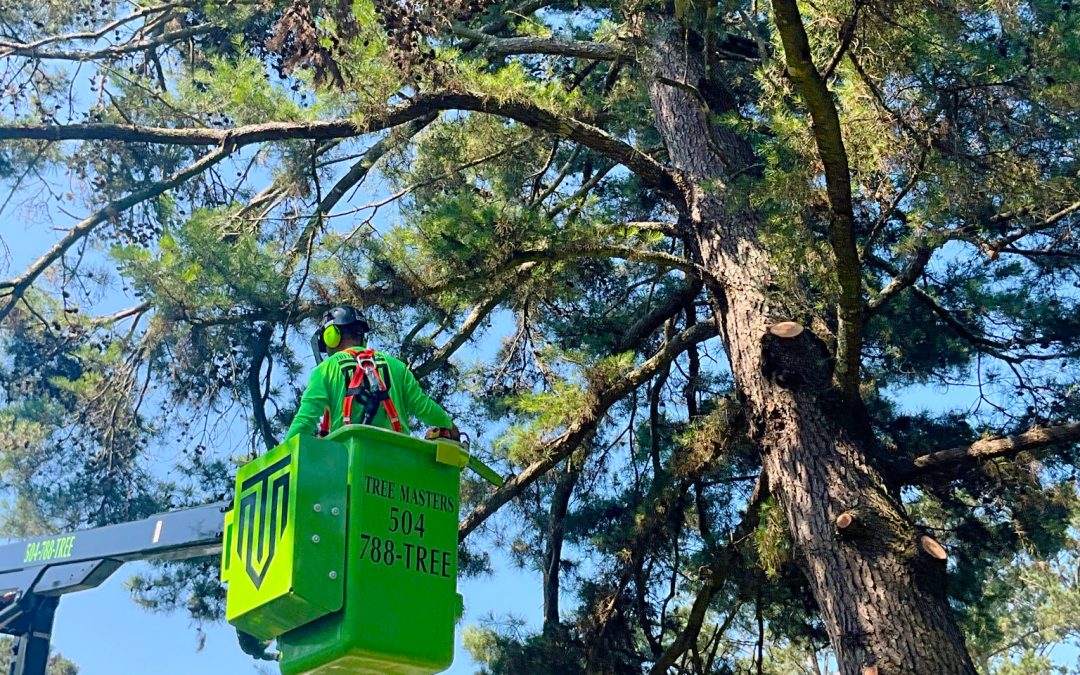
In general, the best time to trim most trees is during late winter or early spring, while they are still dormant. This timing reduces stress and helps prevent disease. For trees that flower in spring, prune them after blooming to avoid removing flower buds. Avoid pruning in late summer or early fall, as it can stimulate new growth that may not harden before winter, leading to damage.
Knowing the best time to trim trees can significantly impact your landscape’s health and safety. Properly timed pruning encourages strong growth, prevents disease, and enhances curb appeal. In this guide, we’ll cover seasonal trimming strategies, safety best practices, tree growth cycles, proper tools, species – specific advice, and when to call in a professional.
When to Trim Trees: Seasonal Breakdown
Every season presents unique risks and opportunities for pruning. Whether you’re dealing with woody shrubs or towering shade trees, here’s how to make seasonally smart pruning choices.
Late Winter (February – March)
Ideal for shade trees, fruit trees, and structural training. In most of the U.S., this is the best season for major pruning — especially in northern states like Minnesota, New York, or Ohio, where trees are in deep dormancy. In southern climates like Louisiana, Texas, or Florida, this season may arrive as early as late December or January.
- No leaves = better visibility.
- Sap isn’t flowing = less stress.
- Healing begins quickly as spring arrives.
- Encourages strong spring growth and flower/fruit production.
Spring (March – June)
Timing becomes more nuanced. In temperate zones like Tennessee, North Carolina, or Missouri, spring bloomers should be pruned after flowers fade. In warmer areas like Georgia or Southern California, some trees may bloom early, so it’s important to monitor local bud cycles before making cuts.
- Prune spring – blooming trees only after they finish flowering.
- Avoid major cuts during leaf – out or bud break.
- Never trim oak trees now — it’s peak oak wilt risk.
- Good time to assess winter damage and make light corrections.
Summer (June – August)
Summer is suitable for light shaping or cleanup. In Midwestern and Northeastern states, avoid pruning during extended heat waves. In arid regions like Arizona or Nevada, avoid major pruning during extreme drought or peak sun intensity.
- Great for light cleanup (deadwood, suckers, crossing limbs). Summer is an ideal time to selectively prune branches that interfere with structure or airflow. Pruning during this phase controls growth while reducing stress.
- Avoid cutting during high heat or drought.
- Perfect for controlling fast – growing branches.
- Summer is good for “bleeder” trees like maple trees and walnut trees.
Fall (September – November)
Fall is generally not ideal across most regions. In Pacific Northwest states like Oregon or Washington, high humidity can promote fungal infections. In the Midwest and Northeast, late fall cuts may not seal before winter frost. Emergency pruning only is recommended.
- Generally not recommended.
- Fungal infections are common.
- Healing is slow and unpredictable.
- New growth is vulnerable to frost.
- Only prune to remove dangerous or broken limbs.
When You Might Need Emergency Tree Care from a Tree Care Professional
While these seasonal guidelines support optimal growth and tree health, some situations can’t wait. Dead, damaged, or dangerous limbs should be pruned immediately — regardless of the time of year.
If a branch threatens your home, power lines, or pedestrian areas, prioritize safety first. Emergency pruning to remove hazards can and should happen at any time, especially after storms or during periods of rapid decline.
Need help fast? Call a certified arborist who can assess the risk and take action safely.
While seasons influence general pruning strategies, your local climate can shift that timing. See below for climate – specific trimming windows based on where you live in the U.S.
Tree Trimming Chart by Tree Type (with Seasonal and Regional Considerations)
Use this chart as a seasonal reference to supplement the species – specific trimming tips shared above. While pruning involves structural or corrective cuts, trimming focuses on managing size, shape, clearance, and visual balance. Timing still matters — these guidelines help ensure trimming supports tree health and appearance without causing unnecessary stress.
| Tree Type | Best Time to Trim | Acceptable Alternatives | Avoid Trimming During | Key Considerations |
|---|---|---|---|---|
| Deciduous Shade Trees | Late Winter / Early Spring | Summer (for light shaping | Fall; Spring leaf-out | Helps maintain canopy shape and clearance. Avoid excess removal during growth spurts. |
| Oak (Quercus) | Mid – Winter (Dormant Season) | — | March – October | Trim only in winter to avoid oak wilt; even light trimming can risk infection. |
| Maple, Birch, Walnut (Bleeders) | After full leaf – out in Summer | Mid – Winter (with caution) | Late Winter; Fall | Trimming in spring can cause sap bleeding; use clean, sharp tools. |
| Evergreen Conifers (Pine, Fir) | Late Winter / Early Spring | Summer (for deadwood only) | Fall | Avoid deep cuts into old wood. Use tip trimming or candle pinching. |
| Evergreen Broadleaf (Holly, etc.) | Late Winter / Early Spring | Summer (light shaping) | Late Fall | Avoid encouraging tender growth before winter cold sets in. |
| Spring-Flowering Trees & Shrubs (Old Wood) | After Bloom | — | Late Winter; Early Spring | Trim only after flowering to preserve next year’s buds. |
| Summer/Fall Bloomers | Late Winter / Early Spring | — | Late summer; Fall | Trim before new growth begins to support fuller blooms. |
| Fruit Trees (Apple, Pear, Plum) | Summer (light trimming only) | Late Winter for structural pruning | Fall | Use trimming for size control and to manage light penetration. |
Regional Tree Trimming Guide: Best Time to Trim Trees in U.S. Climate Zones
Your location plays a major role in determining the safest and most effective time to trim trees. While seasonal cues help, local climate patterns like frost, humidity, and drought can shift ideal timing by weeks or even months.
U.S. Climate-Based Trimming Guidance
Use these regional insights to time tree trimming for appearance, clearance, and overgrowth control—while avoiding stress periods or high disease risk.
Northeast & Midwest
Example States: NY, IL, OH, MI, PA, MN, ME, VT, NH, MA, RI, CT, NJ, WI, IA, IN
Trim in late winter to early spring.
Avoid trimming maple and other “bleeder” trees in early spring when sap flow is high.
Watch for local guidance regarding optimal windows to avoid spreading diseases like oak wilt and fire blight.
Southeast & Gulf Coast
Example States: LA, FL, GA, AL, MS, TX, SC, NC, TN, KY, AR, VA, WV, DE, MD
Trimming can begin as early as December during the dormant season.
Avoid trimming during peak humid months (typically summer) that raise the risk of fungal infections on fresh cuts.
Trim before the start of hurricane season (June 1st) to remove weak or damaged limbs and reduce potential for breakage in high winds.
Southwest & Desert
Example States: AZ, NM, NV, OK, Southern CA, West TX
The best trimming window is during the cooler, dormant months, generally October through February.
Avoid trimming during periods of extreme heat and drought (usually summer) to prevent stressing the tree.
If trimming exposes significant portions of limbs to intense sun, consider using shade paint or leaving some temporary smaller branches for protection.
West Coast & Pacific Northwest
Example States: WA, OR, Northern CA
Target dry periods during late winter (often February-March) for trimming, after the worst of the winter rains but before strong spring growth.
Avoid making large cuts during extended wet spells, common in fall and winter, to reduce the chance of fungal or bacterial diseases entering the fresh wounds.
Mountain West & Intermountain
Example States: CO, UT, ID, WY, MT
Due to colder temperatures and later springs, trimming often starts in early spring (March-April), typically after consistent snowmelt but before bud break.
Good visibility of tree structure during dormancy, often aided by snow cover receding, supports safe and effective shaping or thinning cuts.
Use these regional insights to time tree trimming for appearance, clearance, and overgrowth control — while avoiding stress periods or high disease risk.
- Northeast & Midwest:
Trim in late winter to early spring. Avoid trimming maple and other “bleeder” trees in early spring. Watch for oak wilt and fire blight windows. - Southeast & Gulf Coast:
Trimming can begin as early as December. Avoid humid months that raise fungal risk. Trim before hurricane season to reduce breakage potential. - Southwest & Desert Regions:
Best trimming window is October through February. Avoid peak heat and drought. Use shade paint if limbs are exposed by trimming. - West Coast & Pacific Northwest:
Target dry late – winter periods for trimming. Avoid extended wet spells to reduce fungal spread on fresh cuts. - Mountain West & Intermountain:
Trimming starts in early spring, after snowmelt. Good visibility during dormancy supports safe, effective shaping.
Why Tree Trimming is Important
Tree trimming is more than just cosmetic — it’s a crucial part of maintaining safe, attractive, and well-functioning landscapes. Proper and timely trimming keeps trees looking their best while also helping them coexist safely with nearby structures, walkways, and people.
Unlike trees in wild forests, landscape trees grow near homes, fences, sidewalks, and utilities — making regular trimming essential. Here’s why trimming matters:
- Safety: Overgrown or low – hanging limbs can block visibility, interfere with structures, or pose a falling hazard.
- Clearance: Trimming helps keep branches away from roofs, driveways, signage, and power lines.
- Curb Appeal: A neatly trimmed canopy enhances the tree’s shape and overall appearance.
- Light and Airflow: Reducing density improves sun exposure and airflow around the tree.
- Seasonal Maintenance: Trimming helps maintain sightlines and access, especially for walkways and roads.
Trimming is especially important for fast – growing ornamentals, shrubs, and small trees that need regular shaping to retain their form and function in designed landscapes.
Pruning vs Trimming – What Is the Difference Between Tree Trimming and Pruning?
When it comes to tree care, the terms pruning vs trimming are often used interchangeably — but they serve very different purposes. Understanding the difference between pruning and trimming helps you make better decisions to support tree health, safety, and curb appeal over time.
Tree Pruning vs Trimming: Purpose and Technique
The difference in tree pruning vs trimming starts with intent.
- Pruning is a precise technique that improves a tree’s structure and health. It involves removing dead, diseased, or hazardous limbs, improving airflow, and directing healthy growth.
- Trimming, by contrast, focuses on shaping trees for aesthetics and controlling size. It’s commonly done to prevent overgrowth, clear walkways, or maintain symmetry.
Think of tree trimming vs pruning as the difference between cosmetic grooming and structural surgery.
What Is the Difference Between Tree Trimming and Pruning?
Still wondering what is the difference between tree trimming and pruning? Use this quick reference:
| Criteria | Tree Pruning | Tree Trimming |
|---|---|---|
| Goal | Health, structure, safety | Appearance, size control |
| Focus | Dead/diseased branch removal, shape correction | Outer canopy shaping, visual neatness |
| Best Time | Dormancy (late winter) | Late winter to early summer, based on species |
| Tools Used | Pruners, saws, loppers (precise, structural cuts) | Shears, hedge trimmers (shaping tools) |
| Used For | Trees, fruit trees, large shrubs | Hedges, bushes, ornamental trees |
Trimming vs Pruning: Which Does Your Tree Need?
If your priority is to strengthen your tree, prevent disease, or avoid storm damage — tree pruning is your answer. But if you’re looking to shape the tree for aesthetics or manage growth near buildings or paths, tree trimming might be all you need.
In most cases, both are important. A healthy landscape benefits from regular tree trimming and pruning, timed to match the species and local climate.
Is Pruning the Same as Trimming?
No — pruning is not the same as trimming, even though they’re often confused. The pruning vs trimming tree distinction comes down to biology vs appearance.
- Pruning influences how a tree grows and heals.
- Trimming impacts how it looks and interacts with nearby spaces.
Tree Trimming vs Tree Pruning: Final Thoughts
Knowing the difference between trimming and pruning is essential for smart tree care. While tree trimming vs pruning might seem like a small difference, using the right method at the right time makes a big impact.
Whether you’re managing a row of hedges or preparing for seasonal tree trimming and pruning, always consider the tree’s age, condition, and environment.
When in doubt, consult a certified arborist — especially for larger trees or those near power lines or structures. It’s the best way to protect both your trees and your property.
Tree Growth Cycles and Why Timing Is Key
Understanding a tree’s growth cycle is crucial to making effective cuts. Trimming at the wrong time may cause sap loss, root damage, or impair the tree’s ability to heal.
Tree Energy Cycle
- Dormant (Late Winter): The most appropriate and optimal time for pruning many kinds of trees. During dormancy, trees are less stressed and have high healing potential.
- Early Spring: Trees push out new leaves and buds. Pruning now removes energy reserves.
- Summer: Growth slows and stabilizes — good time for selective shaping.
- Fall: Poor timing. Infections are common, and growth is shutting down.
Pruning during dormancy (typically late winter) often provides the best balance of benefits: good visibility of the branch structure, minimal stress on the tree, rapid wound closure when spring growth begins, and reduced disease risk.
How to Trim Trees Based on Their Type
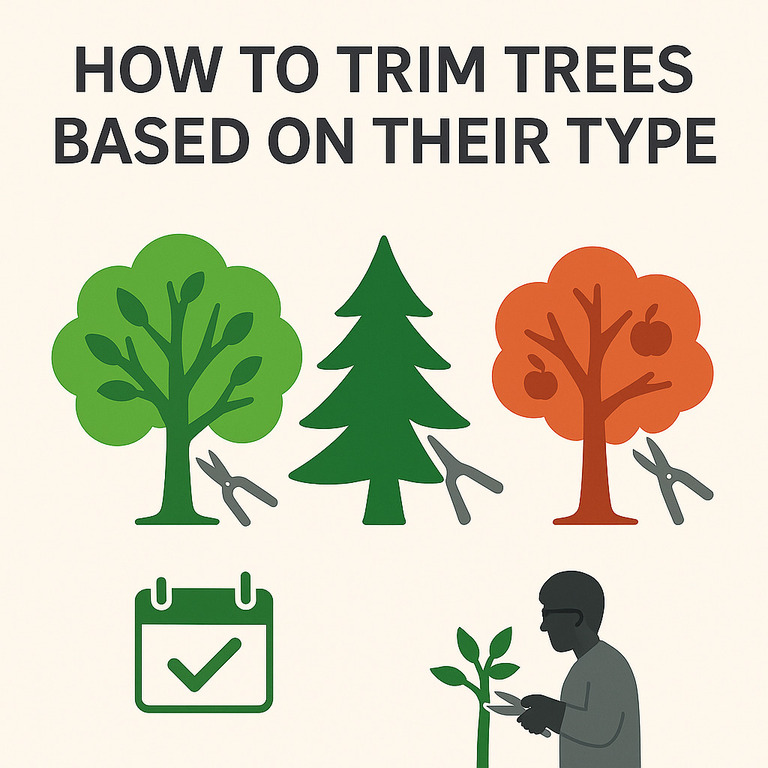
Not all trees respond the same to trimming. Understanding your tree type — from deciduous shade trees to evergreens and fruiting varieties — helps you make thoughtful cuts that support healthy appearance and manage overgrowth.
Deciduous Trees (Maple, Elm, Ash, Oak)
- Best trimmed in late winter or early summer to manage size and shape.
- Avoid trimming oaks between March and October due to oak wilt risk.
- For “bleeder” trees like maple and birch, trim after full leaf – out to avoid sap flow.
Evergreens (Pine, Fir, Arborvitae)
- Light trimming is best in late winter to early spring before new growth.
- Avoid cutting into old wood — many evergreens won’t regrow from deep cuts.
- Pines can be trimmed by shortening new “candles” in early summer.
Flowering Trees & Shrubs
- Spring bloomers (e.g., lilac, dogwood): Trim after flowering to maintain shape.
- Summer bloomers (e.g., crape myrtle): Trim in late winter for fuller flowering.
- Avoid trimming during bud formation to preserve blooms.
Fruit Trees (Apple, Pear, Peach, Plum)
- Light trimming can be done in summer to manage shape and reduce overgrowth.
- Avoid trimming just before or during flowering, as it may reduce fruit production.
Safety-First Tree Trimming: When Professional Tree Care is Needed
When tree limbs threaten your property, people, or utility access, timely removal becomes urgent.
Hazardous Conditions Requiring Prompt Attention
- Dying branches injured by storms or age can become hazardous. Municipal safety inspectors recommend that homeowners property remove dead branches to protect pedestrians, reduce liability, and preserve nearby infrastructure. For young trees, early intervention prevents instability and supports proper form development.
- It’s critical to properly remove dead branches to reduce risk to persons and nearby property.
- Storm – damaged limbs hanging precariously
- Branches interfering with utility lines
- Branches blocking visibility at traffic signals or intersections should be pruned. New growth shrubs near pedestrian crossings or signage should be pruned regularly to maintain clear sightlines. Urban planners recommend seasonal trimming schedules to prevent visual obstructions and reduce accidents.
- Diseased branches showing signs of contagious pathogens
Common Tree Trimming Mistakes to Avoid
Even routine trimming, if done incorrectly, can damage a tree’s structure, weaken its defense systems, or increase long – term maintenance needs. Use the visual guide below to quickly identify the top six errors — and check the list that follows to understand why each one matters.

Quick Breakdown of Each Mistake:
- Stub Cuts
Leaving branch stubs behind invites decay and pests, as the tissue cannot properly seal.
- Flush Cuts
Removes the protective branch collar, slowing wound closure and increasing infection risk.
- Over-Pruning
Removing too much foliage stresses the tree and can trigger weak sprouting.
- Wrong Timing
Increases susceptibility to diseases like oak wilt or fire blight when cuts are made out of season.
- Dull Tools
Create ragged wounds, increasing the risk of bark tear and infection.
Understanding the Biological Impact of Improper Tree Trimming
While trimming focuses on appearance and size control, improper technique can lead to wounds that trees struggle to seal — especially when large limbs are removed or cuts are made without regard to branch collar placement. See below for common trimming mistakes and their long-term effects on tree health.
| Mistake | Description | Why it’s Harmful (Biological/Structural Impact) | Potential Long-Term Consequences |
|---|---|---|---|
| Topping | Indiscriminate cutting of branches/trunk to stubs at a set height. | Removes excessive foliage (starvation); creates large wounds that don’t seal; stimulates weak, poorly attached sprouts; destroys natural structure. | Increased decay, disease, pest susceptibility; high risk of branch/sprout failure; structural instability; eventual tree death; increased future maintenance costs. |
| Flush Cut | Cutting too close to the trunk/parent stem, removing the branch collar. | Removes the tree’s natural defense zone (Wall 4 initiation); prevents proper wound compartmentalization. | Decay spreads into the trunk/parent stem; structural weakening over time; potential for hidden internal decay. |
| Stub Cut | Leaving a portion of the branch protruding beyond the branch collar. | Tree cannot seal over the dead stub tissue; delays wound closure. | Stub provides entry point for decay and pests, which can then move into the main stem. |
| Over-Pruning | Removing too much live foliage (>25% general rule) at one time. | Reduces energy production/storage; causes stress; weakens defenses; can induce sunscald; stimulates excessive stress sprouts. | Tree decline or death; increased susceptibility to pests/diseases; poor appearance; weakened structure due to stress sprouts. |
| Wrong Timing | Pruning during high – risk periods (disease activity, extreme weather, stress). | Increases susceptibility to disease infection, pest infestation, physiological stress (cold/heat injury, sap loss), poor wound closure, or vulnerable new growth. | Spread of lethal diseases (e.g., Oak Wilt); tree stress and decline; winter damage to new growth; poor recovery from pruning. |
| Dull Tools | Using unsharpened or improper tools for the cut. | Creates ragged, torn wounds instead of clean cuts; damages surrounding tissue. | Slow/incomplete wound closure; increased entry points for disease and pests; potential for dieback from the cut. |
Tree Cutting Technique: How to Cut Safely
Trimming may focus on shaping and appearance, but poor technique can still cause lasting damage. Even small cuts affect tree health if done incorrectly. Follow these trimming – specific best practices to ensure safe, effective results:
- Use sharp, clean tools like hand pruners or loppers to make clean, smooth cuts that heal quickly.
- Cut just beyond a healthy bud or lateral twig — angle the cut slightly away to direct future growth outward.
- Avoid leaving stubs, which can attract pests and slow healing.
- Never make flush cuts into the trunk or main branch. Preserve the natural swelling at the base of the branch (the collar).
- Don’t remove more than 15 – 20% of the canopy at one time. Over – trimming stresses the tree and can trigger weak regrowth.
- Work from the outside in, focusing on shaping the tree’s natural form rather than forcing symmetry.
- Avoid topping or shearing, especially on large trees — this weakens structure and promotes unstable shoots.
Trimming may seem simple, but attention to technique ensures your trees stay healthy, attractive, and resilient year after year.
Wound Dressings Myth
Skip the wound paint. Despite common belief, applying sealants or tree paint after a cut doesn’t help healing — in fact, it may trap moisture and pathogens, leading to decay. Trees are biologically equipped to seal off wounds through natural compartmentalization (CODIT). The best approach? Make clean, precise cuts and let the tree do the rest.
How Trees Respond to Wounding: CODIT Explained
A core principle in modern arboriculture is that trees seal, they don’t heal. Unlike animals that regenerate damaged tissue, trees respond to wounds — such as pruning cuts — by compartmentalizing the affected area to isolate it from healthy tissue.
This natural defense system was defined by tree biologist Dr. Alex Shigo and is known as CODIT (Compartmentalization of Decay in Trees). CODIT describes how trees form internal “walls” to limit the spread of decay from a wound:
- Wall 1: Resists vertical spread by plugging xylem vessels above and below the wound. (Weakest barrier)
- Wall 2: Resists inward spread across the annual growth rings (tangential).
- Wall 3: Resists lateral spread along the wood rays (radial).
- Wall 4: The barrier zone — formed by the cambium after injury — separates pre – injury wood from newly formed tissue. (Strongest barrier)
Understanding CODIT underscores why proper pruning matters: poor cuts can overwhelm the tree’s ability to seal off decay, leading to long-term structural problems.
Tool Selection and Safety: What to Use and How to Stay Protected
Having the right tool — and using it correctly — makes a major difference in both pruning effectiveness and personal safety. The table below outlines essential pruning tools, their uses, and the protective equipment you should always wear when using them.
| Tool Type | Typical Branch Size Capacity | Common Uses | Required/Recommended PPE | Key Safety Considerations |
|---|---|---|---|---|
| Hand Pruners (Secateurs) | Up to ¾ inches | Small twigs, shaping shrubs, deadheading, fine pruning | Eye Protection, Gloves | Keep fingers clear of blades; use bypass for live wood. |
| Loppers | ¾ to 1.5–2 inches | Medium – sized branches, fruit tree pruning, removing suckers | Eye Protection, Gloves | Ensure stable footing; keep hands clear; use bypass for live wood. |
| Pruning Saw (Hand Saw) | 1 to 5 inches | Branches too large for loppers, making precise cuts near collar | Eye Protection, Gloves, Hard Hat (if overhead hazard) | Use 3 – cut method for larger branches; keep saw sharp; be aware of falling debris. |
| Pole Saw / Pole Pruner | Variable (lopper ~1 – 1.25″, saw larger) | Reaching high branches from the ground | Eye Protection, Gloves, Hard Hat | Maintain distance from power lines (use non – conductive poles); be aware of falling branches; avoid overreaching; can be heavy/unwieldy at full extension. |
| Chainsaw | > 3 –4 inches | Large limb removal, tree felling, bucking logs | Eye Protection, Face Shield, Hard Hat, Hearing Protection, Gloves, Leg Protection (Chaps), Sturdy Boots | Requires specific training. High risk of kickback, cuts, falling debris. Never use aloft without professional training/equipment. Maintain safe distance from power lines. Follow all manufacturer safety guidelines. |
Stay Safe: Know Your Limits
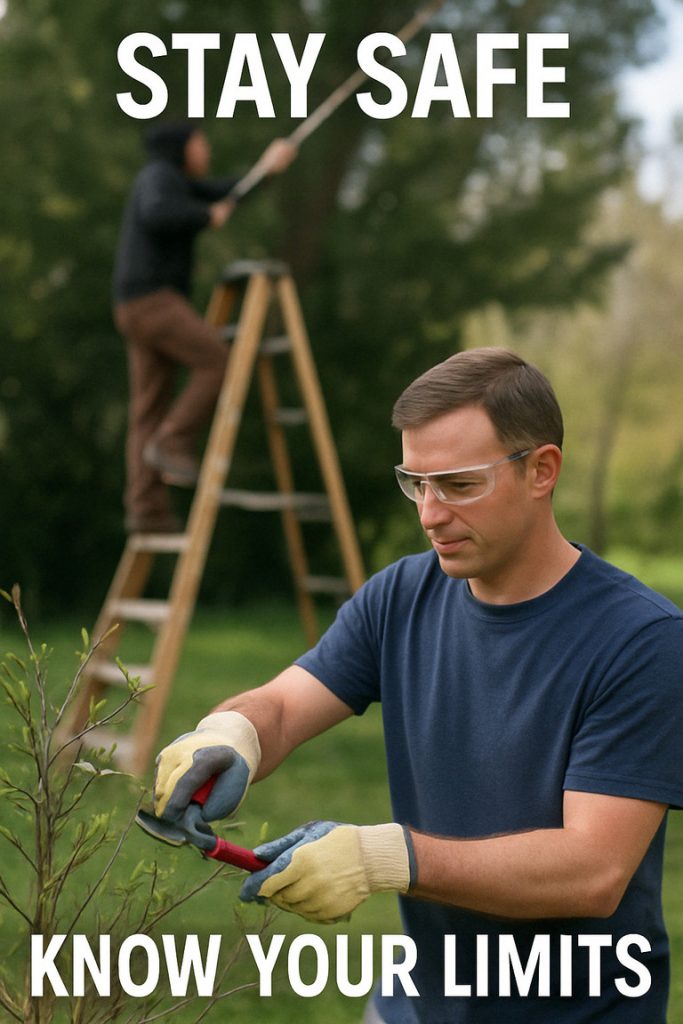
Tree trimming can quickly turn hazardous without the right tools, training, or awareness. Before making a cut, consider these key safety thresholds:
- Ground-level = DIY-friendly.
Tasks like pruning small twigs or shaping new growth shrubs with hand tools are typically safe if both feet remain on the ground. - Off the ground? Call an expert.
If trimming requires climbing, ladders, or overhead work — even with a pole saw — it’s no longer a DIY task. Professional equipment and training are required for safe work at height. - Avoid ladders and chainsaws in combination.
Using a chainsaw on a ladder is one of the leading causes of tree-related injuries. This scenario demands advanced rigging and control only professionals can provide. - Never prune near power lines.
If a job involves overhead utilities or limbs within 10 feet of a line, stop immediately. This is highly dangerous and regulated work — see the next section for when to bring in certified help. - Use the right tool for the job.
Don’t force small tools (like hand pruners or loppers) on thick branches. This increases the risk of tool failure and injury. Match the branch size to the tool’s capacity. - Don’t work beneath unstable limbs.
Dead, hanging, or storm – damaged branches (widowmakers) can fall without warning. Always inspect the canopy before entering your work zone. - Watch your footing.
Avoid trimming on uneven terrain, wet grass, or slopes. Set up on flat, stable ground to prevent slips and falls. - Leave heavy rigging and large removals to pros.
If a branch is large enough to require ropes for descent or is located near structures, the risks are too high for DIY work. - Wear appropriate PPE — always.
At minimum, wear gloves, safety glasses, and durable footwear. For overhead work or chainsaw use, add a hard hat, face shield, hearing protection, and cut – resistant chaps. - When in doubt, call a certified arborist.
Professionals trained to ANSI Z133 and A300 standards know how to prune safely and responsibly. Your safety and the tree’s health depend on it.
When You Need a Pro
Some tree work demands more than just tools — it demands expertise, safety training, and the right equipment. Hire a certified arborist if your tree trimming project involves any of the following:
- Branches near utility lines
Work within 10 feet of overhead electrical wires is highly dangerous and regulated. Contact your utility or hire a certified line – clearance arborist. - Tree work above ground level
If you can’t reach a branch from the ground with pole tools, climbing or using an aerial lift is required — this should only be done by trained professionals. - Large trees or limbs
Limbs over 3 – 4 inches in diameter require rigging, the 3 – cut method, and an understanding of weight distribution. Incorrect removal can damage the tree — or you. - Storm-damaged, diseased, or leaning trees
Structural instability, decay, or cracks make DIY pruning extremely risky. These trees should be assessed and handled by certified professionals. - Signs of pest or disease issues
Diagnosing pests, fungi, or disease symptoms incorrectly can lead to poor timing or ineffective pruning. Arborists provide accurate assessment and treatment. - Complex pruning objectives
Restoring topped trees, reducing canopy size, or correcting co – dominant stems requires advanced knowledge of tree structure and biology. - Tree removal
Felling even small trees can go wrong fast — especially near homes, fences, or walkways. Leave this to insured experts with proper equipment and experience. - Legal restrictions or permit needs
Some cities require permits for trimming large or protected trees. Arborists know the local codes and can ensure you’re in full compliance.
Where to Check Local Tree-Trimming Laws and Permits
Tree laws vary widely from one city or county to the next. While this guide is rooted in best practices for New Orleans and surrounding areas like Metairie, Kenner, and St. Charles Parish, homeowners everywhere should always check local rules before trimming or removing trees.
Here are a few quick ways to find what applies in your area:
- City or County Websites: Search online for your city name + “tree ordinance” (e.g., “New Orleans tree trimming rules”).
- Local Government Contacts: Reach out to your city’s Department of Public Works, Urban Forestry Division, or local Parish office.
- Permit Requirements: Some areas require permits for trimming large, protected, or street-side trees — even on private property.
- HOA or Neighborhood Restrictions: If you live in a planned community, check your homeowner’s association rules.
🛈 New Orleans-area readers:
Your City or Parish Government Website:
Look for departments like Urban Forestry, Parks and Parkways, or Planning & Zoning.
Example for New Orleans: nola.gov/parks – and – parkways/
When in doubt, a certified arborist can help you confirm what’s required and ensure the work is compliant.
Tree Care Is Year-Round
Tree maintenance isn’t a one – season task. Each season plays a role in shaping your tree’s health and lifespan. Pruning new growth shrubs during their active phase promotes healthy structure and discourages leggy or uneven development. Seasonal cuts improve flowering and reduce risk of disease.
Ongoing tree pruning and preventive maintenance are essential to maintain a healthy tree, avoid underlying issues, and optimize growth cycles.
Urban Forest & Community Benefit
Proper tree care goes beyond curb appeal — it contributes to the greater health of our urban forest. Every well – maintained tree improves air quality, supports wildlife, reduces stormwater runoff, and helps regulate climate. By investing in your tree’s care, you’re also strengthening the entire community’s environmental resilience.
Supporting Healthy Trees Across Greater New Orleans
Residents in New Orleans and nearby areas like Lakeview, Metairie, Kenner, West Bank, and St. Charles Parish can benefit from seasonal tree care services tailored to local conditions. Whether you’re looking for routine tree trimming, structural pruning, storm prep, or stump removal, our certified arborists provide safe, expert-level service backed by local experience.
If you’re planning proactive tree work this season, our team is currently offering a limited – time seasonal discount to help make high – quality care more accessible. For details or to get personalized recommendations, call (504) 788-8733 or request a no – obligation estimate online.
Key Takeaways
- Late winter is generally considered the ideal time for early winter pruning, especially for mature trees and those with varied growth habits.
- Avoid trimming oaks from March to October to reduce the risk of oak wilt.
- Prune spring-flowering trees only after blooming finishes.
- Summer pruning is okay for light cleanup — not for major cuts.
- Avoid trimming during fall, drought, or extreme heat.
- Use clean, sharp tools and proper pruning techniques to prevent tree diseases and reduce bark tear or damage to the bark ridge.
- Trim trees young — through careful training — to encourage strong, structural symmetry, prevent undesirable fruiting structures, and establish a desired plant form early on. Young trees benefit from gentle structural shaping during dormancy. This helps prevent future limb failure.
- Know your type of tree — deciduous, evergreen, woody plants, or ornamental — as each has different pruning time needs and growth behavior.
- Use the 3 – cut method for large branches to avoid bark tearing.
- Hire tree care professionals for hazardous trees, tree crowns, or when pruning near traffic signals, overhead wires, or vision at intersections.
- Consider local weather, tree species, and growth cycles.
- A tree’s environment deeply affects its pruning schedule.
- Dead or hazardous limbs should be removed year – round.
- Spring pruning is also vital to control overgrowth in mature trees, stimulate flower and fruit development, and improve air circulation in tree crowns.
- Always prune with purpose: health, safety, beauty, or yield.
- Timing directly affects tree health, wound healing, and longevity.
FAQ: Tree Trimming Questions Answered
When is the best time to prune apple trees?
The ideal time to prune apple trees is during early winter pruning, while the tree is dormant. This supports strong branch development and improves future fruit production.
Can pruning prevent water damage around my property?
Yes. Removing overhanging limbs or invasive roots through proper pruning reduces runoff risks and limits water damage to foundations, roofs, and walkways.
How can I maintain vision at intersections when shrubs block my view?
Timely shrub trimming and regular inspection of nearby woody plants can prevent visibility issues. Municipal guidelines often recommend pruning anything obstructing traffic signals or crosswalks.
Do flowering trees lose their buds if pruned too early?
Absolutely. Trimming blooming trees before flowering ends can eliminate potential flower buds, reducing both flower and fruit development that season.
How is pruning different for fruit vs. ornamental trees?
Fruit trees benefit from shaping and airflow – focused cuts that boost yield, while ornamental trees are pruned mainly for form and visual balance. Knowing the desired plant form is essential for both.
Is there a difference between trimming tops of trees and thinning the canopy?
Yes. Topping (cutting the tops of trees) is harmful and should be avoided. Instead, thinning the canopy through selective cuts maintains natural structure and promotes resilience.
What are signs of underlying tree health issues I should monitor?
Watch for injured or dying branches, fungus at the base, delayed leaf-out, excessive leaning, or reduced canopy growth. These may point to underlying issues needing professional attention.
How can pruning help woody plants stay healthy?
Strategic pruning stimulates growth, improves air circulation, and prevents decay in woody shrubs and woody plants. It’s also essential for shaping younger shrubs into their desired form.
Is there a right time to prune trees with undesirable fruiting structures?
Yes. Early winter pruning or post-flowering trimming helps control undesirable fruiting structures, especially in landscape trees like sweetgum or crabapple.
Does pruning reduce risk to persons walking under trees?
Definitely. Removing low-hanging or broken branches reduces liability and improves safety for pedestrians — especially in high-traffic or urban landscape areas.
Can pruning woody shrubs improve flowering in the next growing season?
Yes. Pruning just after bloom removes spent buds and allows energy to go into new growth, optimizing the next growing season for woody shrubs.
When is the best time to trim oak trees?
The best time to trim oak trees — including Live Oak (Quercus virginiana), Water Oak (Quercus nigra), and White Oak (Quercus alba) — is during the dormant season, typically from December through February. Trimming oak trees in winter helps prevent the spread of oak wilt, a serious disease that can infect fresh cuts made during the growing season.
What is the best time of year to trim pine trees?
Trim pine trees like Loblolly Pine (Pinus taeda) and Eastern White Pine (Pinus strobus) in late winter or early spring. This period supports healthy regrowth and reduces the risk of pest infestation. Avoid trimming pine trees in late summer or fall when sap flow is high and healing is slower.
When should you trim fir trees like Douglas Fir?
Douglas Fir (Pseudotsuga menziesii) trees should be trimmed in late winter or early spring before new growth begins. Light trimming can also be done in early summer. Avoid late-season trimming, which can lead to frost damage and slower recovery.
When is the best time to trim cypress trees?
Bald Cypress (Taxodium distichum) is best trimmed in late winter or early spring. This timing allows the tree to heal before the growing season. Avoid trimming cypress trees in the fall, especially in humid regions where fungal infections are more common.
What is the best time to trim magnolia trees?
Trim Southern Magnolia (Magnolia grandiflora) and Sweetbay Magnolia (Magnolia virginiana) just after they bloom, usually in late spring or early summer. Avoid trimming in winter, as it can remove developing flower buds and lead to reduced blooms in the following season.
When is the best time to trim maple trees?
Maple trees such as Red Maple (Acer rubrum) and Sugar Maple (Acer saccharum) are best trimmed in mid to late summer, after full leaf-out. Avoid trimming maples in late winter or early spring, as they are prone to heavy sap bleeding during that time.
What is the best time to trim crepe myrtle trees?
Crepe Myrtle (Lagerstroemia spp.) trees should be trimmed in late winter or early spring before new shoots appear. Proper trimming encourages full blooming and helps maintain their natural form. Avoid summer trimming and never top crepe myrtles.
When should you trim an elm tree?
Trim American Elm (Ulmus americana) trees in late winter while the tree is dormant. Avoid trimming during spring and early summer to prevent exposure to Dutch elm disease, which can be spread through open wounds by beetles.
When is the best time to trim hackberry trees?
Hackberry (Celtis occidentalis) trees are best trimmed in late winter or early spring before buds break. This helps avoid excessive sap flow and supports healthy regrowth. Avoid trimming during fall, as it may delay healing and invite disease.
What is the best time to trim aspen trees?
Trim Quaking Aspen (Populus tremuloides) in late winter or early spring during dormancy. This prevents bark damage and suckering. Avoid trimming aspen trees during the growing season when wounds are more prone to fungal infection.
When should you trim a beech tree?
Trim American Beech (Fagus grandifolia) in late winter to early spring. Avoid trimming during late summer or fall, as beech trees are sensitive to stress and cuts made too late in the season may not heal before winter sets in.
When is the best time to trim cherry trees?
Black Cherry (Prunus serotina) and ornamental cherry trees are best trimmed in late winter or early spring. For flowering cherries, trim after the bloom period to preserve floral display. Avoid fall trimming, which can increase disease risk.
When should birch trees be trimmed?
Trim Yellow Birch (Betula alleghaniensis) in mid to late summer, after sap flow has diminished. Avoid late winter or early spring trimming when the tree is prone to heavy sap bleeding. Proper timing reduces stress and encourages clean healing.
About This Guide
This article was produced by the expert team at Tree Masters, a locally trusted tree care company proudly serving New Orleans and surrounding areas for over 20 years. Our certified arborists specialize in safe, science – backed tree trimming, structural pruning, storm prep, and removal tailored to Louisiana’s unique climate.
How We Create Our Content
All of our care guides are developed using a blend of hands – on experience from the field and research from leading sources including the International Society of Arboriculture (ISA), USDA plant health guidelines, and regional university extension programs. We regularly update our information to reflect seasonal timing, local ordinances, and best practices in urban forestry and residential tree care.