
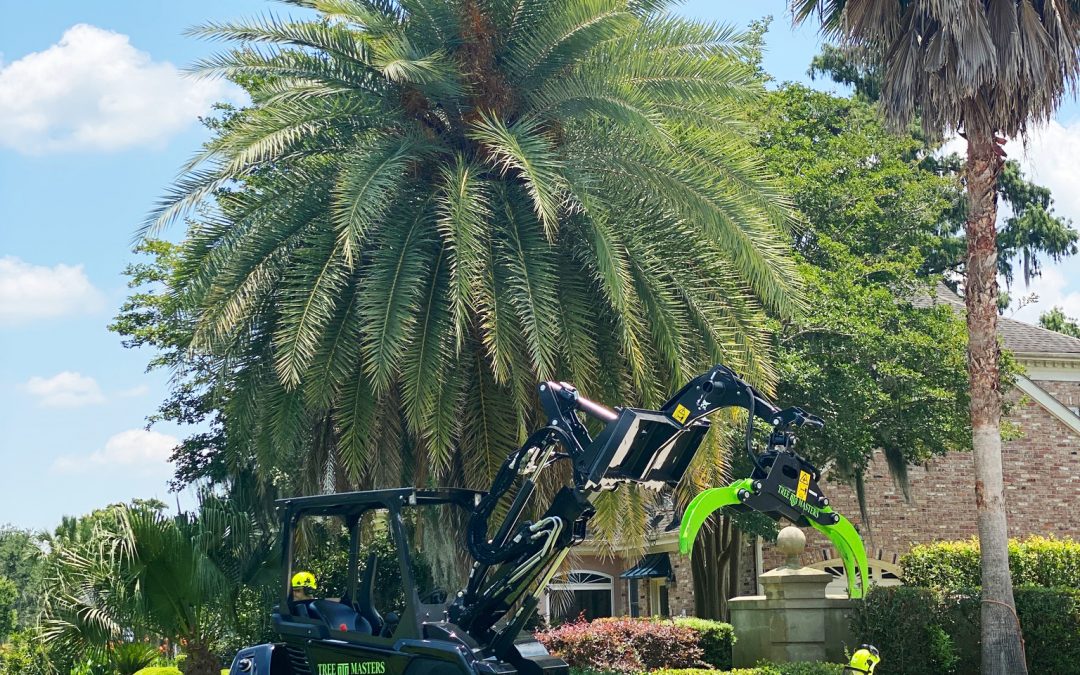
Palm trees call to mind beaches, vacations, and warm breezes. They’re a classic symbol of relaxation and escape, but these members of the Arecaceae family do far more than look good on postcards. With more than 2,500 species worldwide, palms like the coconut palm and date palm have sustained people for centuries. They provide food, shelter, and materials. They aren’t just decorative trees, but carry a cultural weight, ecological importance, and practical value.
Different Types of Palm Trees
Palm Tree Types Chart
| Palm Type | Leaf Shape | Height Range | Best Climate | Indoor/Outdoor | Root Depth | Aesthetic Value |
|---|---|---|---|---|---|---|
| European Fan Palm | Fan (Palmate) | 6-15 ft | Cool subtropical | Both | Shallow | High ornamental |
| Windmill Palm | Fan (Palmate) | 20-40 ft | Cold-hardy zones 7-10 | Outdoor | Medium | Architectural |
| California Fan Palm | Fan (Palmate) | 50-75 ft | Desert/arid | Outdoor | Deep | Desert landmark |
| Coconut Palm | Feather (Pinnate) | 60-100 ft | Tropical coastal | Outdoor | Shallow-wide | Tropical icon |
| Queen Palm | Feather (Pinnate) | 40-50 ft | Warm subtropical | Outdoor | Medium | Elegant residential |
| Date Palm | Feather (Pinnate) | 50-75 ft | Hot, dry climates | Outdoor | Very deep | Ancient dignity |
| Kentia Palm | Feather (Pinnate) | 6-10 ft | Temperate | Indoor | Shallow | Victorian elegance |
| Areca Palm | Feather (Pinnate) | 6-7 ft | Warm | Both | Medium | Golden tropical |
| Lady Palm | Fan clusters | 6-8 ft | Subtropical | Indoor | Shallow | Dense screening |
| Parlor Palm | Feather (Pinnate) | 4-6 ft | Tropical | Indoor | Very shallow | Compact charm |
Best Palms by Region
Florida Favorites: Temperature and humidity support these robust selections that grow palm trees successfully:
- Royal Palm (Roystonea regia) – State tree, especially the coconut palm’s coastal cousin
- Cabbage Palm (Sabal palmetto) – Native species that thrives in hurricane conditions
- Coconut Palm – Coconut palms thrive in coastal areas with moist, hot climates
- Queen Palm – Popular residential choice where evergreen leaves create year-round beauty
California Champions: Dry summers and mild winters enhance these drought-tolerant varieties:
- California Fan Palm (Washingtonia filifera) – Native to desert areas with deep root depth
- Canary Island Date Palm – Soil conditions support slow establishment but exceptional drought tolerance
- Mediterranean Fan Palm – Perfect for partial shade locations with limited water
- King Palm (Archontophoenix cunninghamiana) – Thrives in coastal microclimates (also excellent for fast growth)
Sources: Palmpedia – Washingtonia filifera, Palmpedia – Chamaerops humilis Both species are explicitly described as drought-tolerant.
Texas Tough Palms: Hot climates and variable moisture levels support these resilient selections:
- Sabal Palm (Sabal mexicana) – Native to Rio Grande Valley lowland forests
- Pindo Palm – Cold-hardy to zone 7b with distinctive silvery fronds
- Windmill Palm – Survives Houston winters in protected growing zones
- Mexican Fan Palm – Heat tolerance optimizes growth in full sun locations
Fan Palms (Palmate Leaves)
European Fan Palm (Chamaerops humilis) – The only palm native to Europe, this cold-hardy species forms multiple trunks and grows 6-15 feet tall. Its fan-shaped leaves make it perfect for Mediterranean climates and container growing.
Windmill Palm (Trachycarpus fortunei) – One of the most cold-tolerant palms, surviving temperatures down to 5°F. It features distinctive brown fiber covering the trunk and grows 20-40 feet tall with dark green fan leaves.
California Fan Palm (Washingtonia filifera) – Native to desert oases in California and Arizona, this palm can reach 75 feet. Dead fronds naturally form a “skirt” around the trunk if not pruned.
Feather Palms (Pinnate Leaves)
Coconut Palm (Cocos nucifera) – The iconic tropical palm that produces coconuts. Grows 60-100 feet tall with gracefully curved trunks and feathery fronds up to 18 feet long. Requires warm tropical conditions and is not suitable for indoor cultivation
Queen Palm (Syagrus romanzoffiana) – A popular landscape palm with elegant, arching fronds and orange dates. Grows 40-50 feet tall and thrives in warm, humid conditions.
Date Palm (Phoenix dactylifera) – Cultivated for over 4,000 years, this palm produces edible dates and can live for centuries. Male and female flowers grow on separate trees.
Specialty Palms
Fishtail Palm (Caryota spp.) – Unique bipinnate leaves that resemble fish tails. These palms flower once in their lifetime, then die after producing seeds.
Sago Palm (Cycas revoluta) – Despite its name, this isn’t a true palm but a cycad. It’s slow-growing with dark green, feathery fronds and can live for centuries.
Bottle Palm (Hyophorbe lagenicaulis) – Features a distinctive swollen trunk that stores water. Native to Mauritius, it’s now endangered in the wild but popular in cultivation.
Find Your Perfect Palm
Not sure which palm is right for your home or yard? Take this quick quiz to match your climate, space, and style with the palm species that will thrive best.

🌴 Which Palm is Right for Your Space?
Are Palm Trees Really Trees or Just Grass?

🌴 Palm Tree = Giant Grass?
Short Answer: No, but they’re closer to grass than oak trees!
The Science: Palms aren’t true trees — they’re monocots, making them closer relatives of grasses than oaks. Each palm grows from a solitary shoot rather than an axillary bud like most trees and shrubs.
[Palm – Characteristic Morphological Features (Britannica)]
Palm trees aren’t technically trees despite their common name. They’re monocotyledons, making them more closely related to grasses, lilies, and orchids than to oak or pine trees. This botanical classification explains their unique characteristics and growth patterns.
Key Differences from True Trees:
- No wood formation: Palms lack a vascular cambium, so they can’t produce wood or increase trunk diameter over time
- Fibrous structure: Their trunks consist of fibrous vascular bundles embedded in softer tissue, like reinforced concrete
- Single growing point: They grow from one apical meristem at the crown – damage this and the palm dies
- No growth rings: Palm trunks don’t show annual rings because they don’t add layers of wood
- Primary growth only: They achieve height through cell elongation, not secondary thickening
What Makes Them Look Like Trees:
- Structural strength: Fibrous vascular bundles provide remarkable strength and flexibility
- Impressive height: Some species reach over 200 feet through primary growth alone
- Tree-like form: Single trunk with crown of leaves mimics traditional tree architecture
- Longevity: Many species live 100+ years, like traditional trees
The Monocot Advantage: This unique anatomy makes palms incredibly resilient to wind damage – they bend rather than break during storms. However, it also makes them vulnerable to trunk injuries that never heal, unlike true trees that can compartmentalize and seal wounds.
Scientific Classification:
- Kingdom: Plantae
- Clade: Angiosperms (flowering plants)
- Clade: Monocots
- Order: Arecales
- Family: Arecaceae (palm family)
- Common relatives: Grasses, bamboos, lilies, orchids
Where Do Palm Trees Grow Naturally?
Most palm trees naturally occur between 44° North and 44° South latitude, where temperature supports year-round growth in moist and hot climates. Palms thrive in different habitats across warm climates, from lowland forests to coastal zones where many palms develop robust root systems that handle saltwater exposure.
Primary Global Distribution:
- Southeast Asia and Pacific Islands – Dense clusters of over 1,500 species thrive in hot climates
- South America – Several palm genera flourish in the Amazon Basin and Caribbean tropics
- Madagascar – Nearly 200 endemic species grow in isolated growing zones
- Africa – Palm genera concentrate in equatorial regions with consistent sun exposure
United States Native Species:
- Florida – Temperature supports cabbage palmetto, saw palmetto, and needle palm growth
- South Carolina – Soil conditions enhance cabbage palmetto development (state tree)
- Texas – Climate allows Sabal palm and dwarf palmetto to establish deep root depth
- California – Only California fan palm survives naturally in desert oases
Cold-Hardy Palms in Surprising States:
| State | Palm Species | Growing Zone | Cold Tolerance |
|---|---|---|---|
| North Carolina | Needle Palm | 6b-9a | Survives to -5°F |
| Virginia | Windmill Palm | 7a-10a | Handles 10°F |
| Arkansas | Sabal Palm | 7a-11 | Tolerates 12°F |
| Tennessee | European Fan Palm | 7b-11 | Withstands 15°F |
| Oklahoma | Pindo Palm | 7b-11 | Endures 5°F |
Climate Requirements That Support Growth:
- Temperature – Soil affects palm survival; most need 60°F+ year-round
- Growing zones – Palms thrive in USDA zones 8-11 primarily
- Moisture – Many palms require consistent water but avoid waterlogged conditions
- Sunlight – Full sun to partial shade depending on species adaptation
Native vs Ornamental Distribution: Gardener selections have expanded palm availability far beyond natural ranges. While only items like coconut palms naturally distribute via ocean currents (Gunn et al., 2011), human cultivation has introduced palm trees to every continent except Antarctica. The trunk develops differently in cooler climates, often remaining shorter with almost constant diameter throughout the growing season.
🌿 Did You Know?
- For thousands of years, cultures in the Middle East and other Middle Eastern peoples have relied on palms for food, shelter, and building materials.
- Most palms thrive in tropical and subtropical climates, but the coconut palm is iconic worldwide — valued for its fruit, spirally arranged fronds, and strong root systems that anchor sandy coastlines.
How Long Do Palm Trees Live and How Fast Do They Grow?

Palm Growth Timeline Chart
| Palm Species | 5 Years | 10 Years | 20 Years | Mature Height | Lifespan |
|---|---|---|---|---|---|
| Queen Palm | 8-12 ft | 20-25 ft | 35-40 ft | 40-50 ft | 50-80 years |
| Coconut Palm | 6-8 ft | 15-20 ft | 30-40 ft | 60-100 ft | 80-150 years |
| Date Palm | 4-6 ft | 8-12 ft | 20-25 ft | 50-75 ft | 100+ years |
| Windmill Palm | 3-4 ft | 6-8 ft | 12-15 ft | 20-40 ft | 100+ years |
| European Fan Palm | 2-3 ft | 4-5 ft | 6-8 ft | 6-15 ft | 100+ years |
| Royal Palm | 10-15 ft | 25-30 ft | 40-50 ft | 50-80 ft | 80-120 years |
| Canary Date Palm | 3-5 ft | 8-12 ft | 18-25 ft | 40-60 ft | 100+ years |
| Areca Palm | 4-6 ft | 6-8 ft | 8-10 ft | 10-12 ft | 40-60 years |
Palm lifespans and growth rates vary dramatically by species, with slower-growing palms generally living longer:
Growth Rate Categories
Fast Growing (2+ feet per year):
- Queen Palm – Can add 2-3 feet annually in ideal conditions
- Royal Palm – Rapid vertical growth in tropical climates
- King Palm – Quick establishment in warm, humid areas
- Alexander Palm – Fast growth in protected locations
Moderate Growing (1-2 feet per year):
- Coconut Palm – Steady growth once established
- Bismarck Palm – Moderate pace with impressive final size
- Chinese Fan Palm – Consistent annual growth
- Foxtail Palm – Reliable moderate growth rate
Slow Growing (6-12 inches per year):
- Date Palm – Extremely slow but long-lived
- Canary Island Date Palm – Patience required but worth the wait
- Sago Palm – Notoriously slow, adds few leaves per year
- Mediterranean Fan Palm – Gradual growth over decades
Very Slow Growing (Under 6 inches per year):
- Windmill Palm – Extremely slow but very hardy
- European Fan Palm – Minimal annual growth
- Needle Palm – Glacial pace but excellent cold tolerance
Growth Factors
Faster Growth:
- Warm, humid climates
- Rich, well-draining soil
- Regular fertilization
- Consistent moisture
Slower Growth:
- Cooler temperatures
- Poor or alkaline soils
- Drought stress
- Nutrient deficiencies
Most palms establish their final trunk diameter within the first few years, then grow vertically. They can’t increase trunk girth like traditional trees.
What Are the Best Indoor Palm Plants?

Indoor palms bring tropical elegance to homes while tolerating lower light conditions. Here are top choices:
Low-Light Champions
Kentia Palm (Howea forsteriana)
- Tolerates low light and dry air
- Grows slowly to 10 feet indoors
- Victorian-era favorite, still popular today
Lady Palm (Rhapis excelsa)
- Thrives in low to medium light
- Forms attractive clumps 6-8 feet tall
- Very forgiving of neglect
Parlor Palm (Chamaedorea elegans)
- Perfect for small spaces (4-6 feet)
- Adapts to low light conditions
- Produces small yellow flowers indoors
Bright Light Varieties
Areca Palm (Dypsis lutescens)
- Golden-yellow stems and fronds
- Grows 6-7 feet indoors
- Excellent air purifier
Ponytail Palm (Beaucarnea recurvata)
- Technically not a palm but cared for similarly
- Drought-tolerant with swollen base
- Curly leaves cascade from top
Majesty Palm (Ravenea rivularis)
- Dramatic arching fronds
- Needs bright, indirect light
- Can reach 10 feet indoors
Care by Space Type
Small Apartments (Under 500 sq ft):
- Parlor Palm (Chamaedorea elegans) – Only 4-6 feet tall, tolerates low light
- Baby Lady Palm (Rhapis excelsa ‘Dwarf’) – Compact clustering form
- Cat Palm (Chamaedorea cataractarum) – Pet-safe option with delicate fronds
Bright Offices:
- Areca Palm (Dypsis lutescens) – Air-purifying golden stems
- Bamboo Palm (Chamaedorea seifrizii) – Thrives in fluorescent lighting
- Kentia Palm (Howea forsteriana) – Professional appearance, very tolerant
Low-Light Bedrooms:
- ZZ Palm (Zamioculcas zamiifolia) – Not a true palm but similar appearance, extremely low-light tolerant
- Lady Palm (Rhapis excelsa) – Handles dim conditions better than most
- Parlor Palm – Victorian era’s choice for dimly lit parlors
High-Ceiling Rooms:
- Majesty Palm (Ravenea rivularis) – Can reach 10 feet indoors with dramatic fronds
- Kentia Palm – Elegant height without overwhelming spread
- Fishtail Palm (Caryota mitis) – Unique leaves create tropical atmosphere
How Do You Care for Palm Trees and Palm Plants?

Palm care requires understanding how soil affects growth rates and how gardeners can optimize conditions for healthy development. Temperature influences root depth establishment, while proper techniques streamline maintenance and enhance long-term palm health.
Outdoor Palm Care – Professional Guidance
Arborist-Recommended Watering Schedule:
- Newly planted: Soil supports young palms when watered daily for first 2 weeks, then every other day for 6 weeks
- Established palms: Root depth determines frequency; deep watering 1-2 times per week optimizes growth
- Winter care: Gardener reduces frequency but never allows complete soil drying
Palm Nursery Fertilization Program: Professional growers enhance palm health through systematic feeding:
- Primary nutrients: Use 8-2-12 ratio fertilizer; soil conditions support palms when nitrogen stays moderate
- Application schedule: Gardener applies 3-4 times per year during growing season to optimize growth
- Micronutrients: Temperature affects nutrient uptake; manganese and magnesium supplements enhance frond color
- Organic enhancement: Compost addition improves soil structure and supports root development
Interior Designer Tips for Container Growing: Indoor plants require responsive care that handles unique challenges:
- Drainage systems: Soil supports palm health when excess water drains freely
- Root depth management: Container size affects growth; palms thrive when roots have adequate space
- Aesthetic placement: Interior designers optimize light conditions while enhancing room ambiance
Seed Propagation and Planting Guide
Professional Palm Nursery Techniques:
Fresh Seed Requirements:
- Availability timing: Seeds maintain viability best when planted within 2-4 weeks of harvest
- Coconut propagation: Plant whole coconut halfway in sand (exception to depth rule due to size); germination occurs in 1-3 months under optimal temperature
- Date palm seeds: Root depth develops slowly; grower maintains moist, warm conditions for 2-6 months
- Fan palm varieties: European fan palm seeds respond to cold stratification before warm germination
Seed Planting Steps:
- Soil preparation: Professional growers enhance germination rates with well-draining, sterile mix
- Depth placement: Plant seeds at depth equal to twice their diameter (coconuts are the main exception)
- Temperature control: Heat mat maintains 80-85°F for tropical species
- Moisture management: Gardener keeps soil moist but not waterlogged
Availability and Sourcing:
- Local nurseries: Availability varies by region; call ahead to secure desired species
- Online suppliers: Reputable palm nurseries ship nationwide with proper packaging
- Specialty growers: Some rare species only available through collector networks
- Seed exchanges: Palm societies offer member seed swaps for unusual varieties
Streamlined Care Calendar
Professional Arborist Schedule:
Spring Enhancement (March-May):
- Fertilization restart: Soil temperature supports nutrient uptake; gardener resumes feeding program
- Root assessment: Professional checks root depth and health after winter dormancy
- Pruning evaluation: Remove only completely brown fronds to optimize photosynthesis
Summer Optimization (June-August):
- Water management: Deep irrigation enhances drought tolerance; soil stays moist 6 inches down
- Pest monitoring: Regular inspection helps handle problems before they become severe
- Growth support: Monthly fertilization optimizes rapid summer growth period
Fall Preparation (September-November):
- Nutrient storage: Final heavy fertilization enhances winter hardiness
- Seed removal: Gardener removes flower/seed stalks to streamline energy conservation
- Structural assessment: Arborist evaluates trunk stability and frond attachment
Winter Protection (December-February):
- Cold preparation: Frost protection optimizes survival in marginal climates
- Reduced maintenance: Minimal watering enhances root health during dormant period
- Planning phase: Nursery orders and garden design for spring planting
How Do You Trim or Remove a Palm Tree?
Proper Palm Trimming
What to Remove:
- Completely brown, dead fronds only
- Fronds hanging below horizontal line
- Old seed stalks and flower clusters
- Broken or damaged fronds
What NOT to Remove:
- Yellow or partially green fronds (they’re still producing nutrients)
- Fronds above horizontal line
- New growth emerging from center
DIY Palm Tree Trimming Guide
How to Trim a Palm Tree Yourself: Trimming a palm tree yourself requires understanding palm biology and safety procedures:
Essential Tools:
- Sharp, sterile pruning shears for small fronds
- Pole saw for higher branches
- Safety equipment (hard hat, eye protection, gloves)
Step-by-Step DIY Process:
- How to cut palm tree leaves: Only remove completely brown, dead fronds
- Angle cuts properly: Cut close to trunk without damaging bark
- Timing matters: Best done during warm, dry periods to prevent infection
- Never top: Avoid cutting into green crown area – this kills the palm
How to Trim a Small Palm Tree (Under 10 feet):
- Safety assessment: Ensure stable footing and clear work area
- Identify targets: Only brown fronds hanging below horizontal line
- Clean cuts: Use sharp tools to prevent frond tearing
- Sanitize tools: Clean between cuts to prevent disease spread
How to Trim Palm Tree Trunk:
- Remove old frond bases: Carefully cut away persistent leaf bases
- Avoid over-cleaning: Leave some natural texture for trunk protection
- Never “skin” completely: Palm trunks need some protective covering
- Professional consultation: Consider expert advice for valuable specimens
DIY Limitations:
- Height restrictions: Only attempt palms you can safely reach
- Disease identification: Professional diagnosis recommended for sick palms
- Tool requirements: Specialized equipment needed for larger specimens
Professional Removal Costs
Size-Based Pricing:
- Small palms (under 10 ft): $200-500
- Medium palms (10-25 ft): $500-1,500
- Large palms (25-50 ft): $1,500-3,000
- Giant palms (50+ ft): $3,000-8,000+
Additional Cost Factors:
- Location complexity: +$200-1,000 (near structures, power lines)
- Stump grinding: +$150-400
- Debris removal: +$100-300
- Crane rental: +$500-2,000 for tall specimens
- Permits: $50-200 (if required by city)
DIY vs Professional Cost Comparison:
| Task | DIY Cost | Professional | Safety Risk |
|---|---|---|---|
| Small palm trimming | $50-100 | $150-300 | Low |
| Large palm trimming | Not recommended | $300-800 | High |
| Palm removal (small) | $100-200 | $400-800 | Moderate |
| Palm removal (large) | Not recommended | $1,500+ | Extreme |
Before & After Trimming Results:
- Proper trimming: Removes only brown fronds, maintains natural crown shape, palm stays healthy
- Over-trimming (“hurricane cutting”): Weakens palm, increases wind vulnerability, reduces growth rate
- Professional trimming: Clean cuts, proper timing, disease prevention protocols followed
Professional Palm Tree Services and Cost Calculators
Palm Tree Trimming Service Options: Professional palm tree pruning service providers offer comprehensive maintenance programs that handle seasonal care, disease prevention, and aesthetic enhancement. Palm tree trimming service costs vary significantly based on palm height, location accessibility, and regional labor rates.
Palm Tree Removal Cost Factors: Palm tree removal cost calculations include multiple variables beyond basic size:
- Species complexity: Some palms require specialized removal techniques
- Root system extraction: Complete stump and root removal adds $200-500
- Disposal fees: Palm frond and trunk disposal costs vary by region
- Site restoration: Replanting or landscaping post-removal
Cost Calculator Variables:
- Palm height: Primary factor in palm tree trimming cost calculator formulas
- Species complexity: Some palms require specialized palm tree pruning service techniques
- Location access: Proximity to structures affects palm tree removal service pricing
- Seasonal demand: Hurricane season increases palm tree trimming service requests
Service Package Options:
- Basic trimming: $150-400 for standard residential palms
- Full maintenance: $300-800 including fertilization and pest inspection
- Emergency services: Premium rates for storm damage or urgent palm tree removal service needs
- Annual contracts: Discounted rates for recurring palm tree trimming service agreements
Palm tree removal service pricing typically ranges:
- Small palms (under 15 ft): $400-800 total removal
- Medium palms (15-30 ft): $800-2,000 including cleanup
- Large palms (30+ ft): $2,000-5,000+ with specialized equipment
Palm Tree Removal Cost Breakdown:
- Dead palm tree removal: Often costs 20-30% less due to reduced weight and complexity
- Stump grinding: Additional $150-400 depending on root system complexity
- Debris disposal: $100-300 for frond and trunk removal from property
- Site cleanup: $50-200 for area restoration after removal
Palm Tree Trimming Prices by Service Level:
- Basic maintenance: $75-200 for small residential palms
- Professional trimming: $150-400 including disease inspection
- Full service care: $300-600 with fertilization and pest treatment
Palm Tree Trimming Before and After Results:
- Before: Overgrown fronds, seed stalks, and potential hazards
- After: Clean crown shape, improved health, enhanced aesthetic appeal
- Recovery time: 2-4 weeks for new growth to become visible
What Are the Best Palm Trees for Landscaping?

Landscape designers optimize outdoor spaces by selecting palms that enhance aesthetic value while requiring minimal maintenance. Professional gardeners grow palm trees in combinations that support different design goals, from creating tropical paradise themes to establishing drought-resistant xeriscapes.
Front Yard Design Templates
Tropical Paradise Layout: Interior designers and landscapers create immersive experiences where palms thrive alongside complementary plants:
- Centerpiece: Royal Palm (Roystonea regia) – Impressive height optimizes visual impact
- Mid-layer: Queen Palms create depth; root depth doesn’t compete with other plants
- Ground level: Areca palms and bird of paradise enhance the tropical aesthetic
- Accent plants: Hibiscus and crotons support the palm branch canopy structure
Mediterranean Oasis Design: Landscape professionals handle dry climates by selecting drought-resistant combinations:
- Focal point: Canary Island Date Palm – Massive trunk develops impressive presence
- Screening: European Fan Palm clusters – Multi-trunk habit results in natural privacy
- Companion plants: Lavender and rosemary thrive in similar soil conditions
- Hardscaping: Stone pathways and terra cotta planters optimize water retention
Desert Modern Aesthetic: Contemporary designers enhance xeriscapes where palms grow with minimal irrigation:
- Statement palm: Date Palm – Deep root depth supports drought tolerance
- Architectural plants: Agaves and desert willows create geometric contrast
- Ground cover: Decomposed granite mulch supports water conservation
- Lighting: LED uplighting optimizes nighttime dramatic effect
Small Space Solutions
Compact Palm Selection for Limited Areas:
Container-Friendly Options: Professional nurseries recommend palms that respond well to restricted root zones:
- Pygmy Date Palm – Cylindrical shape fits narrow spaces; almost constant diameter throughout life
- European Fan Palm – Clustering habit results in dense screening without excessive spread
- Lady Palm – Interior designers favor this species for its responsive growth to pruning
Vertical Garden Integration: Landscape architects handle space constraints through strategic placement:
- Wall-mounted planters – Young palms develop well in elevated containers
- Tiered arrangements – Different palm genera create layered canopy effects
- Corner placements – Single palm specimens optimize unused space areas
Botanical Institution Perspectives on Palm Characteristics
Scientific Classification and Trunk Texture Differences: Research institutions streamline palm identification through standardized trunk texture categories:
Trunk Texture Defining Traits:
- Smooth trunks: Royal palms and coconut palms develop seamless, concrete-like surfaces
- Ringed trunks: Each leaf node leaves distinctive scars creating horizontal ring patterns
- Fibrous trunks: Windmill palms retain brown fiber covering that gardener can remove or preserve
- Spiny trunks: Phoenix species handle protection through sharp leaf base projections
Frond Type Categorization System: Botanical classifications enhance identification accuracy through systematic frond analysis:
Primary Frond Categories:
- Pinnate (Feather-type): Leaflets arrange along central rachis in spirally arranged patterns
- Palmate (Fan-type): Segments radiate from single point where petiole splits open
- Costapalmate: Intermediate form where central costa extends into fan structure
- Bipinnate: Rare type where leaflets divide again (fishtail palms represent this same kind)
Palm Nursery Operator Supply Chain Insights
Commercial Propagation Methods: Professional nurseries handle palm production through two methods that optimize success rates:
Method 1 – Seed Propagation:
- Soil temperature enhances germination when maintained at 80-85°F consistently
- Fertilizer boosts early seedling development during first growing season
- Gardener monitors leaf node development as indicator of successful establishment
- Common representation in nursery trade: 60-70% of palm inventory starts from seed
Method 2 – Vegetative Division:
- Clustering members of palm colonies provide offshoots for clonal propagation
- Root division occurs when shoots develop independent root systems
- Success rates improve when gardener trims damaged roots before transplanting
- Close growing zones benefit from locally adapted parent stock
Nursery Availability and Sourcing: Palm nursery operators streamline supply chains through regional specialization:
- Local varieties: Common species maintain consistent availability year-round
- Specialty palms: Rare varieties require advance ordering, limited seasonal availability
- Container sizes: Standard inventory ranges from 1-gallon to 25-gallon specimens
- Field-grown specimens: Large palms need professional handling, transport scheduling
What Fruit Grows on Palm Trees?
Edible Palm Fruits
Dates (Phoenix dactylifera)
- Sweet, nutritious fruits rich in potassium and fiber
- Varieties include Medjool, Deglet Noor, and Zahidi
- Harvested in fall when fully ripe
Coconuts (Cocos nucifera)
- Young green coconuts provide coconut water
- Mature brown coconuts yield coconut meat and oil
- Takes 11-12 months to fully develop
Açaí Berries (Euterpe oleracea)
- Antioxidant-rich purple fruits
- Harvested from Amazon rainforest palms
- Must be processed quickly after picking
Saw Palmetto Berries (Serenoa repens)
- Dark blue fruits used in herbal medicine
- Native to southeastern United States
- Harvested commercially for supplements
Ornamental Palm Fruits
Queen Palm Dates
- Orange clusters but not typically eaten
- Attractive to wildlife
- Remove to prevent mess and pest issues
Pindo Palm Fruits
- Yellow to orange, grape-sized fruits
- Edible with sweet-tart flavor
- Used for jellies and wine
Important Safety Note
Some palm fruits are toxic to humans or pets. Never eat unidentified palm fruits. Sago palm seeds are extremely poisonous and can be fatal if consumed.
Where Does Palm Oil Come From?
Palm oil comes from the African oil palm (Elaeis guineensis), originally native to West Africa but now cultivated primarily in Indonesia and Malaysia.
Production Process
Fruit Harvest:
- Oil palms produce large bunches of red-orange fruits
- Each bunch contains 1,000-3,000 individual fruits
- Harvested every 10-14 days year-round
Oil Extraction:
- Palm oil extracted from fruit flesh (mesocarp)
- Palm kernel oil extracted from seed inside fruit
- Different properties and uses for each oil type
Global Impact
Economic Importance:
- World’s most widely used vegetable oil
- Found in 50% of packaged supermarket products
- Major economic driver for producing countries
Environmental Concerns:
- Deforestation for new plantations
- Loss of orangutan and tiger habitat
- Carbon emissions from peat bog clearing
- Impact on indigenous communities
Sustainable Options:
- Roundtable on Sustainable Palm Oil (RSPO) certification
- Support for smallholder farmers
- Zero-deforestation commitments from major producers
What Diseases and Problems Affect Palm Trees?
Palm Problem Diagnosis Chart
| Symptom | Possible Cause | Treatment | Prevention |
|---|---|---|---|
| Yellow bands on frond edges | Magnesium deficiency | Apply Epsom salt (MgSO4) | Use palm-specific fertilizer |
| Yellow/orange spots on older fronds | Potassium deficiency | Potassium sulfate application | Regular K+ rich feeding |
| Weak, frizzled new fronds | Manganese deficiency | Manganese sulfate soil/foliar | Avoid alkaline soils |
| Yellowing from oldest to newest | Lethal yellowing disease | Antibiotic injection (early stage) | Plant resistant varieties |
| Brown, mushy crown | Bud rot (fungal) | Usually fatal, remove palm | Avoid overwatering, improve drainage |
| Bracket fungi on trunk | Ganoderma butt rot | No cure, remove immediately | Prevent trunk wounds |
| One-sided frond death | Fusarium wilt | No cure, quarantine area | Disinfect tools between palms |
| V-shaped cuts in fronds | Coconut rhinoceros beetle | Pheromone traps, biocontrols | Remove breeding sites |
| Wilting despite wet soil | Root rot | Improve drainage, reduce watering | Well-draining soil mix |
| Brown leaf tips | Salt damage/overwatering | Flush soil, adjust watering | Use filtered water |
Disease Cost Impact Analysis
Early Detection vs Late Treatment:
- Nutrient deficiency caught early: $20-50 in fertilizer
- Advanced deficiency: $200-500 in treatments + reduced palm value
- Preventive care annual cost: $100-200 per palm
- Disease treatment: $500-2,000+ (if treatable)
- Palm replacement: $500-5,000+ depending on size
Key Takeaways on Palm Trees
- Diversity of Species: Palms belong to the Arecaceae family with over 2,500 species. They range from small indoor plants like parlor palms to towering outdoor varieties such as coconut and royal palms .
- Tree or Grass?: Botanically, palms aren’t true trees. They’re monocots, more closely related to grasses and lilies, which explains their unique trunk structure and lack of growth rings .
- Global Distribution: Most palms grow naturally in tropical and subtropical zones, but cold-hardy species like windmill and needle palms can survive in U.S. states far beyond Florida and California .
- Growth and Lifespan: Growth rates vary dramatically—queen palms may add 2–3 feet annually, while windmill palms grow just a few inches. Lifespans range from 40 years for fast growers to over 100 years for slow species .
- Indoor Palms: Popular options include parlor, kentia, and areca palms. Each thrives under different light and space conditions, making them versatile houseplants .
- Care Essentials: Healthy palms need the right soil, watering schedules, and seasonal care. Over-pruning and poor drainage are common mistakes that shorten lifespan .
- Trimming & Removal Costs: Small palms may cost $200–500 to remove, while large specimens can exceed $5,000. Professional trimming prevents disease and avoids dangerous DIY attempts .
- Landscaping Value: Palms suit many design styles—from tropical paradises to desert xeriscapes. Small species like pygmy date palms are perfect for compact spaces .
- Fruits & Products: Palms produce valuable fruits (coconuts, dates, açaí) and byproducts (palm oil, coir, rattan). Some fruits, like those of the sago palm, are toxic .
- Palm Oil: Derived from Elaeis guineensis, palm oil is the world’s most-used vegetable oil. While economically vital, it raises deforestation and sustainability concerns .
- Diseases & Risks: Palms face nutrient deficiencies, lethal yellowing, fungal rots, and pests like rhinoceros beetles. Early detection can save hundreds in treatment costs, while neglect may require full replacement .
- Climate Resilience: Their flexible structure makes palms remarkably wind-resistant, helping them survive storms that fell other trees .
Palms bring beauty, shade, and value to any space—whether indoors or across your landscape. But keeping them healthy takes more than watering and hope. From nutrient care to safe trimming and storm prep, expert attention ensures your palms thrive for years to come.
For homeowners in Greater New Orleans, Tree Mastersstands apart with certified arborists, 20+ years of local experience, and a reputation for safe, science-backed care.
Protect your investment and enjoy worry-free palms with a free estimate from Tree Masters.
Frequently Asked Questions About Palm Trees
What grows on palm trees?
Palm trees produce various fruits including dates, coconuts, açaí berries, and saw palmetto berries. They also grow flowers (usually small and clustered), new fronds from the crown, and some species produce nuts or seeds used commercially.
Do palm trees grow coconuts?
Only coconut palms (Cocos nucifera) grow coconuts. Many other palms produce different types of fruits that people often mistake for coconuts, such as queen palm dates or bottle palm fruits.
How do you care for indoor palm plants?
Indoor palms need bright, indirect light, consistent moisture (but not soggy soil), humidity around 40-50%, and temperatures between 65-80°F. Fertilize monthly during growing season with diluted palm fertilizer.
How long do palm trees live?
Palm lifespans vary by species: Date palms can live 100+ years, coconut palms 80-150 years, while faster-growing species like queen palms typically live 50-80 years. Proper care significantly extends lifespan.
How fast do palm trees grow?
Growth rates vary dramatically: Queen palms grow 2-3 feet per year, while windmill palms only grow 3-6 inches annually. Climate, nutrition, and water availability greatly influence growth speed.
What are palm fronds?
Palm fronds are the large leaves of palm trees. They come in two main shapes: fan-shaped (palmate) like those on Washingtonia palms, and feather-shaped (pinnate) like those on coconut palms.
What states have palm trees?
Native palms grow in Florida, South Carolina, Texas, California, Arizona, North Carolina, Georgia, Louisiana, and Hawaii. Many other states grow palms as ornamentals in suitable microclimates.
Are palm trees grass or trees?
Palm trees are neither true trees nor grasses, though they’re more closely related to grasses. They’re monocots in the Arecaceae family with unique growth patterns and anatomy.
Why do palm trees grow so tall?
Palms grow tall to compete for sunlight in crowded tropical forests. Their single growing point concentrates all growth energy upward, and their flexible structure allows them to sway without breaking in strong winds.
Do palm trees produce oxygen?
Yes, palm trees produce oxygen through photosynthesis like all green plants. However, they’re not exceptional oxygen producers compared to faster-growing trees or dense forests.
What are palm trees used for?
Palms provide food (dates, coconuts), oil (palm oil, coconut oil), fiber (coir from coconuts, rattan from climbing palms), construction materials, paper products, and serve as ornamental landscape plants.
How do palm trees reproduce?
Palms reproduce sexually through flowers and seeds. Some species have separate male and female plants (dioecious), while others have both male and female flowers on the same plant (monoecious).
What is palm tree wood used for?
Palm “wood” isn’t true wood but compressed fibrous material. It’s used for construction in tropical areas, flooring, furniture, and craft items. Coconut palm wood is increasingly popular as a sustainable timber alternative.
Why are my palm tree leaves turning yellow or brown?
Yellow/brown leaves can indicate natural aging (normal for oldest fronds), overwatering, underwatering, nutrient deficiencies (especially potassium or magnesium), cold damage, or disease. Location and pattern of yellowing help determine the cause.
Can palm trees become invasive?
Several palm species demonstrate invasive potential when introduced outside their native ranges. Soil improves palm establishment, but this same advantage allows problematic species to outcompete native vegetation in suitable climates.
Invasive Mechanisms:
- Rapid seed production: Queen palms produce hundreds of seeds annually that germinate readily
- Vegetative expansion: Date palms create clustering members through underground shoots
- Wind dispersal: Fan palm seeds travel long distances when weather splits open mature seed pods
- Water dispersal: Coastal palms like coconuts establish new colonies along waterways
Management Strategies: Gardener prevents invasive spread through proactive management:
- Remove seed stalks before they split open and release propagules
- Choose sterile cultivars of same kind when available for landscaping
- Monitor established palms in close growing zones for unwanted seedlings
- Plant native alternatives in ecologically sensitive areas where common representation of invasives occurs
What are the best container palm trees?
Container cultivation allows gardener control over palm size while maintaining aesthetic value in limited spaces. Soil composition and drainage enhance container success rates significantly.
Top Container Palm Performers:
Small Container Specialists (6-12 inch pots):
- Parlor Palm – Responsive growth stays compact; low maintenance requirements streamline care
- Baby Lady Palm – Clustering habit results in full appearance without excessive size
- Cat Palm – Secure root system handles pot restrictions well
Medium Container Options (14-20 inch pots):
- European Fan Palm – Multi-trunk specimens enhance visual interest; robust drought tolerance
- Kentia Palm – Slow growth suits long-term container culture; fertilizer boosts performance
- Areca Palm – Golden coloration stays vibrant with proper container nutrition
Large Container Choices (24+ inch pots):
- Lady Palm – Mature specimens create natural screens; responsive to regular feeding
- Windmill Palm – Cold tolerance allows outdoor container growing in temperate zones
- Majesty Palm – Dramatic scale possible in spacious containers with proper care
Container Success Factors: Professional techniques streamline container palm cultivation:
- Drainage optimization: Soil supports root health when excess water drains freely
- Regular repotting: Root binding prevention requires size increases every 2-3 years
- Nutrition management: Container palms need consistent fertilizer to boost healthy growth
- Seasonal adjustments: Indoor/outdoor transitions require gradual light adaptation
How deep should I plant a palm seed?
Seed planting depth directly affects germination success rates across different palm species. Gardener follows botanical guidelines to enhance establishment and streamline early growth phases.
Species-Specific Depth Requirements:
Large Seeds (Coconuts, Date Palms):
- Planting depth: Equal to seed diameter; soil supports when consistently moist but not waterlogged
- Soil preparation: Sandy, well-draining mix enhances root development
- Temperature needs: 80-85°F soil temperature optimizes germination timing
- Success indicators: New shoot emergence occurs within 2-6 months under ideal conditions
Medium Seeds (Fan Palms, Queen Palms):
- Optimal depth: 2x seed width provides secure anchoring without excessive burial
- Soil mixture: Equal parts peat, perlite, and sand streamline drainage and aeration
- Moisture control: Consistent dampness without waterlogging; common representation shows 70% success rates
- Leaf node development: First true leaves appear 3-8 months after planting
Small Seeds (Parlor Palms, Areca Palms):
- Surface planting: Light soil covering allows easier emergence; splits open naturally during germination
- Environmental control: Humidity domes enhance moisture retention around seeds
- Light exposure: Bright, indirect light responsive to seedling development needs
- Growth timeline: Initial sprouting within 4-12 weeks; clustering members may develop later
Professional Nursery Techniques: Commercial growers handle seed propagation through two methods:
- Individual pot method: Each seed gets separate container; root development stays undisturbed
- Flat tray method: Multiple seeds in large containers; transplanting required as seedlings mature
Fertilizer application begins only after true leaves develop and leaf nodes become clearly established. Early feeding can damage delicate root systems before they become sufficiently robust to handle nutrient uptake.
About This Guide
This article was produced by the expert team at Tree Masters, a locally trusted tree care company serving the New Orleans area for over 20 years. Our ISA-certified arborists specialize in science-backed tree trimming, storm prep, and removal adapted to Louisiana’s climate.
How We Create Our Content
Our care guides are created using hands-on field experience and verified research from sources such as the International Society of Arboriculture, USDA Plant Hardiness Guidelines, and local university extension programs. All content is reviewed by certified arborists and updated seasonally.
Appendix
A.- Palm Disease & Problem Cheat Sheet
Keep Your Palms Healthy Year-Round
Palm trees add beauty and value to your property, but spotting problems early makes all the difference. Our Palm Disease & Problem Cheat Sheet gives you a simple one-page guide to quickly identify nutrient issues, pests, and diseases—along with fixes and prevention tips.
👉 [Download the Free Palm Disease & Problem Cheat Sheet] and protect your investment with confidence.
Make sure they download “Palm_Disease_Cheat_Sheet_Final” attached.
B. – Cold Resistance Scale – Defining Characteristics
Professional Cold Hardiness Categories:
| Hardiness Level | Temperature Range | Representative Species | Trunk Response | Frond Protection |
|---|---|---|---|---|
| Ultra-Hardy | -5°F to 10°F | Needle Palm, Windmill Palm | Robust structure handles freeze cycles | Responsive folding reduces wind damage |
| Cold-Tolerant | 15°F to 25°F | European Fan Palm, Pindo Palm | Secure trunk fiber provides insulation | Fronds yellow but recover in spring |
| Frost-Sensitive | 28°F to 32°F | Queen Palm, King Palm | Trunk stays stable, leaf nodes vulnerable | Fertilizer boosts recovery after cold damage |
| Tropical-Only | 35°F+ required | Coconut Palm, Royal Palm | Any freeze damages growing points | Immediate protection needed below 40°F |
C. – Best Container Palm Trees for Responsive Indoor Growing
Container Compatibility Assessment: Gardener selects palms based on root behavior and aesthetic value in confined spaces:
Tier 1 – Highly Responsive Container Palms:
- Parlor Palm – Soil conditions optimize in 6-8 inch pots; handles low light responsively
- Lady Palm – Clustering members thrive in decorative containers; secure root systems
- European Fan Palm – Multi-trunk specimens enhance visual appeal in large planters
Tier 2 – Moderately Container-Friendly:
- Areca Palm – Root expansion requires yearly repotting; fertilizer boosts golden coloration
- Kentia Palm – Slow growth suits long-term container cultivation; robust drought tolerance
- Cat Palm – Responsive to regular feeding; aesthetic value increases with maturity
Container Growing Optimization Techniques: Professional methods streamline container palm success:
- Drainage enhancement: Soil improves when gardener adds perlite and sand mixture
- Root management: Secure potting prevents top-heavy specimens from tipping
- Nutrient delivery: Fertilizer boosts container palm growth through monthly liquid feeding
D. – Advanced Palm Seed Planting Depth Guidelines
Scientific Planting Depth Requirements: Botanical research enhances germination rates through precise depth calculations:
Depth Formula by Seed Type:
- Large seeds (coconuts): Plant at depth equal to seed diameter; soil supports when kept consistently moist
- Medium seeds (dates, fan palms): Depth equals 2x seed width; gardener maintains 80°F soil temperature
- Small seeds (parlor palms): Surface sowing with light soil cover; common representation shows 60-80% success rates
Environmental Factors That Enhance Success:
- Temperature control: Heating mats streamline consistent warmth delivery
- Moisture management: Soil retains optimal moisture when covered with plastic wrap
- Light exposure: Germination occurs faster when seeds receive indirect bright light
E. – Palm Invasiveness Assessment by Region [INFOGRAPHIC]
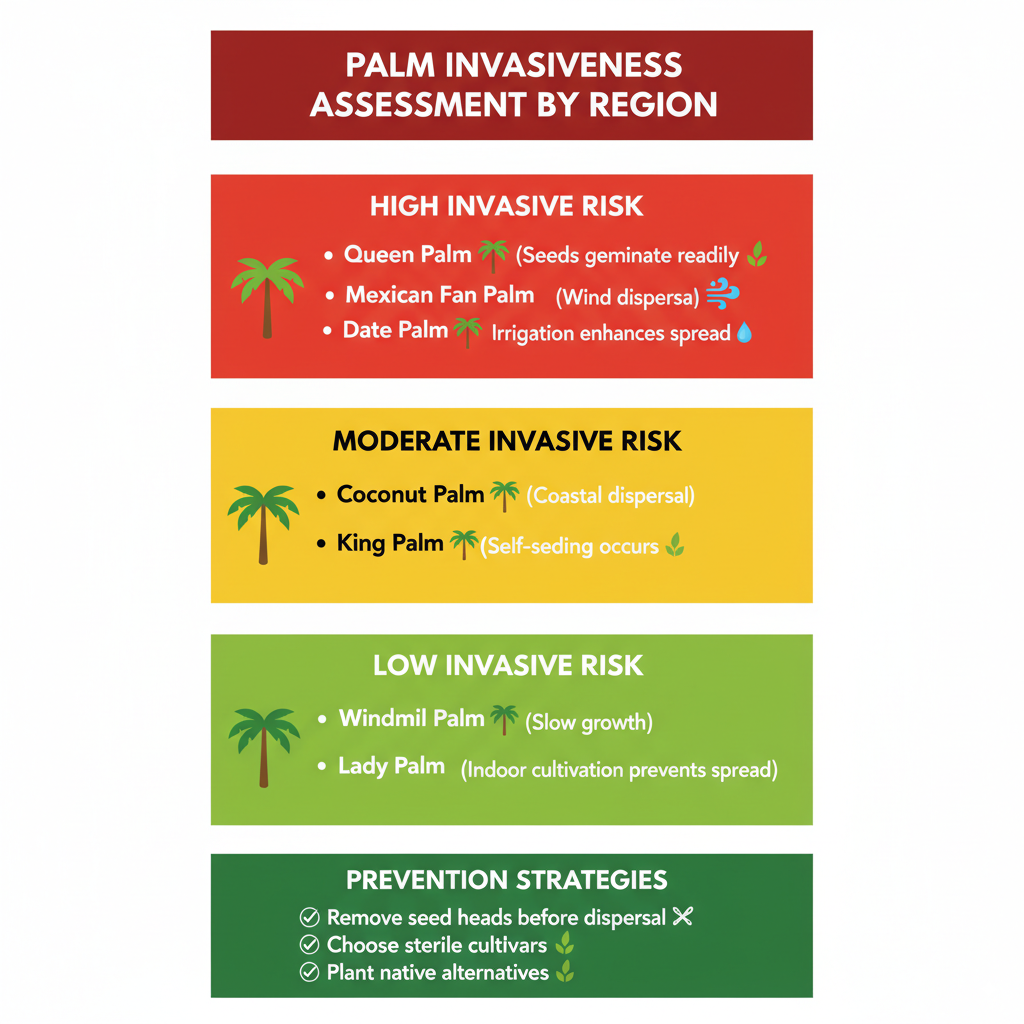
Invasive Potential Categories: Environmental scientists handle invasive species through risk assessment protocols:
High Invasive Risk:
- Queen Palm – Seeds germinate readily; close growing zones see rapid colonization
- Mexican Fan Palm – Wind dispersal creates new colonies; robust seedlings outcompete natives
- Date Palm – Offshoots establish dense stands; irrigation systems enhance spread
Moderate Invasive Risk:
- Coconut Palm – Coastal dispersal limited by habitat specificity
- King Palm – Self-seeding occurs but establishment rates stay moderate
Low Invasive Risk:
- Windmill Palm – Slow growth limits competitive advantage
- Lady Palm – Indoor cultivation prevents widespread naturalization
Prevention Strategies: Responsible gardeners streamline invasive prevention through proactive management:
- Remove seed heads before they split open and disperse
- Choose sterile cultivars when available for same kind of aesthetic appeal
- Plant native alternatives in sensitive ecological areas